C2A Comparative Analysis:
Clancy, Correia, Maberry, & More
C2A does not read like a straightforward clone of any one major genre author. So here’s a thorough and deep C2A Comparative Analysis; its nearest literary neighborhood is roughly:
Jonathan Maberry + Larry Correia + John Ringo + Tom Clancy, with some David Weber in the institutional machinery and Frank Peretti / Left Behind in the Christian-apocalyptic architecture.
THE WAR IS JUST BEGINNING!
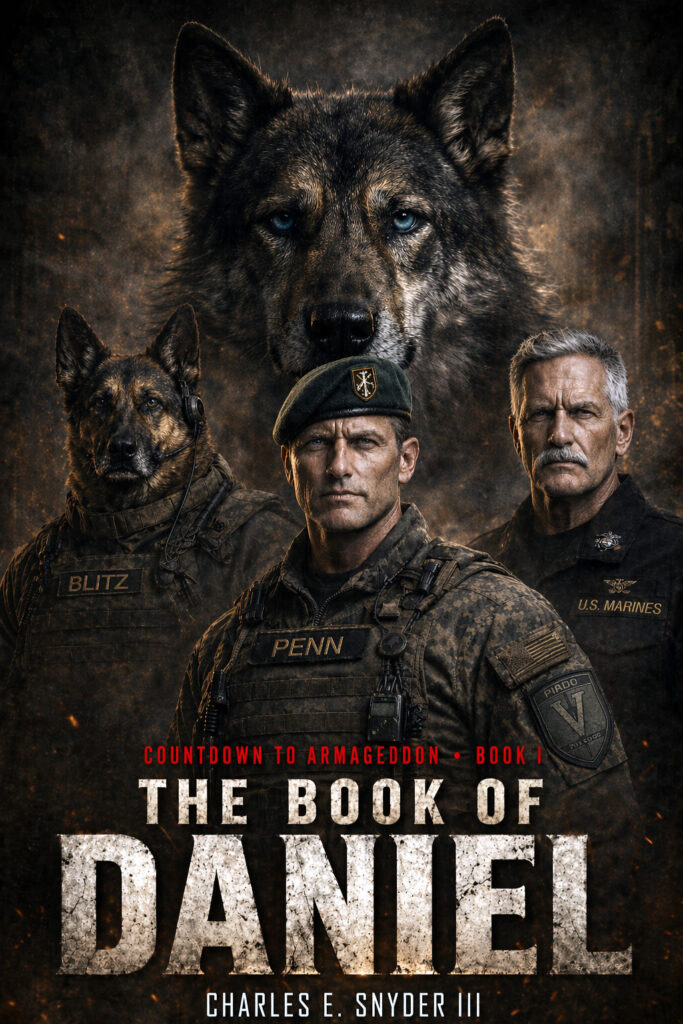
Advanced Review Copy (ARC) Readers Wanted!Countdown to Armageddon: The Book of Daniel
Release Date: September 11, 2026
Limited slots are still available!
But that description still misses one of the things becoming increasingly distinctive about the series: C2A filters military SF, horror, theology, and absurd humor through character cognition rather than maintaining one consistent genre voice.
However, if you had to pick the closest single major-name comparison, Jonathan Maberry’s Joe Ledger series is probably the closest single shelf-neighbor. But even that breaks down pretty quickly under any kind of scrutiny.
Comparative Matrix
|
Author |
Where C2A Overlaps |
Where C2A Separates |
|---|---|---|
|
Jonathan Maberry |
Black operations, military professionals confronting monsters/bio-threats, tactical problem-solving, sarcasm under horror conditions |
C2A is more ensemble-driven, more interested in military institutions, technology development, long callbacks, prophecy, and legacy |
|
Larry Correia |
Guns, monsters, practical hardware, irreverence, people responding to impossible creatures by asking what caliber kills them |
Correia leans harder into pulp swagger; C2A puts more weight on command responsibility, casualties, trauma, faith, and institutional consequences |
|
John Ringo |
Unit culture, military banter, hardware, large-scale warfare, competent people solving ugly practical problems |
C2A is less competence-porn driven and generally makes the emotional cost stay on the books |
|
Tom Clancy |
Chain of command, weapons, communications, intelligence, military bureaucracy, operational planning |
Clancy is much more geopolitical/procedural and externally narrated; C2A is rougher, funnier, more character-filtered, and much more comfortable letting demons crash the briefing |
|
David Weber |
Military organization, doctrine, technological constraints, bureaucracy, expanding cast and strategic scale |
Weber is far more formal and exposition-heavy; C2A uses shorter, vernacular prose and lets character personality contaminate the exposition |
|
Stephen King / |
Supernatural apocalypse, societal collapse, ordinary humanity behaving absurdly while civilization burns |
Their prose tends toward deeper atmosphere and psychological excavation; C2A treats horror more like an immediate operational problem |
|
Frank Peretti |
Christian supernatural reality beneath ordinary reality, literal evil, spiritual conflict |
Peretti foregrounds spiritual warfare; C2A initially forces it through a skeptical military worldview |
|
LaHaye/Jenkins |
Tribulation structure, biblical prophecy, end-times escalation |
C2A is emphatically not a prophecy-tour narrative. The military story and character choices remain the foreground rather than stopping for theological explanation |
C2A Comparative Analysis:
10 Reasons These Books Stand Out
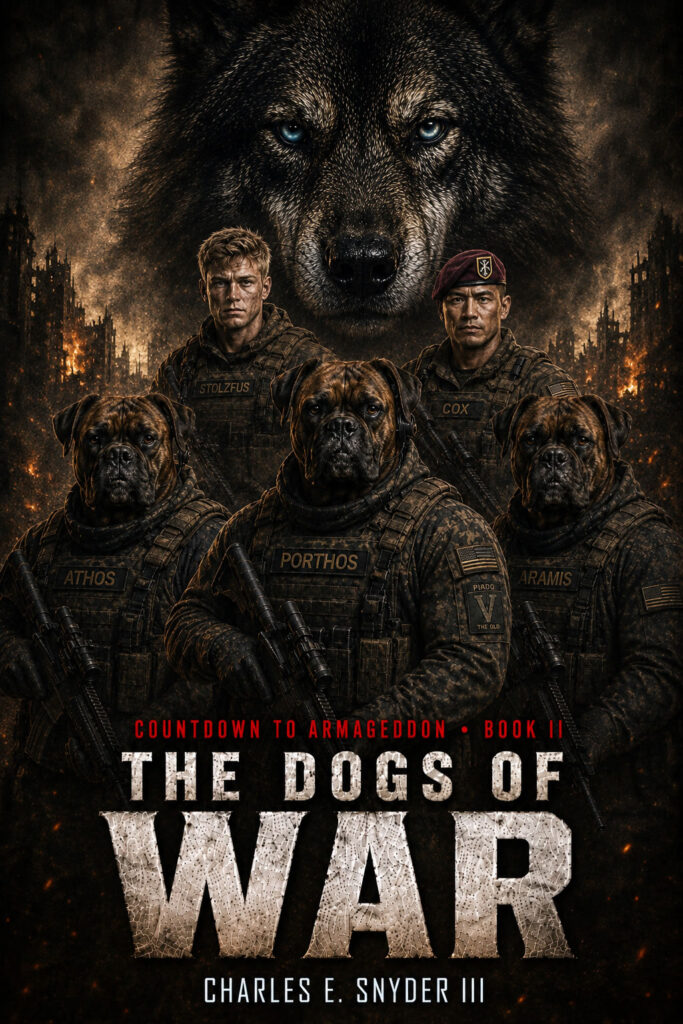
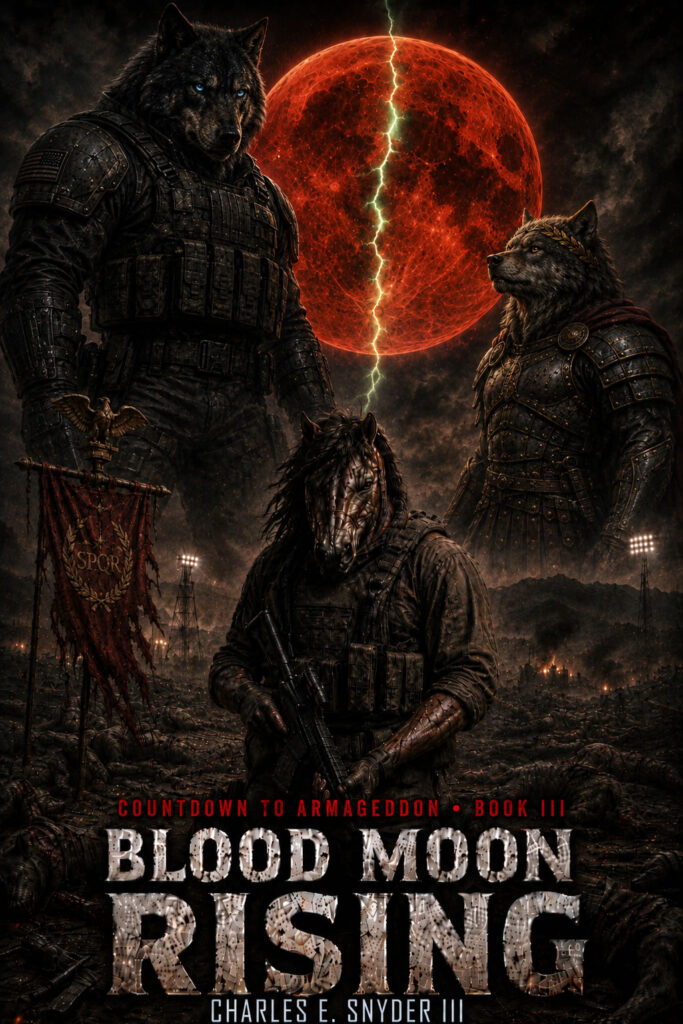
Here are ten main factors that differentiate Book I: The Book of Daniel, Book II: The Dogs of War, and Book III: Blood Moon Rising (so far). Here is the deep-dive C2A Comparative Analysis:
1. Sentence-level style:
C2A is much less Clancy than the subject matter suggests.
The opening of Book I is an excellent example. You go from conventional military narration into:
Boots.
Gear.
Rifle.
And other clipped fragments as Daniel Penn transitions from sleep to combat cognition. The rhythm is deliberately procedural without being procedural exposition. We aren’t being taught how soldiers prepare. But we are experiencing how Penn’s brain reduces reality to immediate tasks.
That’s a meaningful distinction.
- Clancy generally explains systems from above.
- Weber often explains systems through extended exposition.
- Ringo frequently explains systems through characters who are enthusiastic about the systems.
C2A more commonly asks:
What does this particular bastard need from the machine right now?
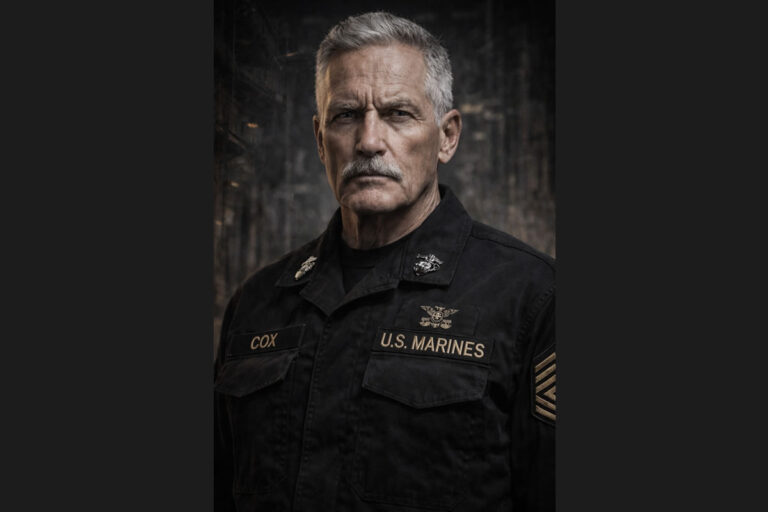
That becomes even clearer around 77 Westing. Radios, ammunition, weapon rehabilitation, crew positions, extraction contingencies, and personnel shortages all get described, but nearly everything is attached to Penn’s command problem. Even the ketchup-and-salt rifle cleaning isn’t hardware pornography. It’s Cox being an ancient Marine who knows a filthy field-expedient trick that might keep somebody alive.
So that puts the technical prose somewhere between Ringo and Clancy, but with substantially more blue-collar texture.
2. The closest single shelf-neighbor
Jonathan Maberry is probably the closest C2A comes to being somewhat adjacent. The Joe Ledger comparison works remarkably well at first glance:
Military/black-project people discover the impossible is real. Monsters and biological threats coexist with conventional enemies. Characters use guns, intelligence work, interrogation, science, and brute force against things that shouldn’t exist. Humor becomes psychological armor.
The Callide interrogation is practically a manifesto for the C2A approach.
Penn is talking to something claiming to be a demon. His response isn’t immediate mystical awe. He interrogates it, watches body language, uses technology to test it, mocks its stupid title, and keeps trying to turn supernatural encounter back into an intelligence problem. Then a mundane piece of technology produces evidence he can’t explain, his entire worldview gets punched in the throat.
C2A Comparative Analysis: The series vs. Maberry
That is very much in Maberry’s general territory. But there is an important difference. Maberry’s work generally remains thriller-first.
C2A increasingly becomes something closer to a future-history of a war told by the people unfortunate enough to live through it.
The series tracks:
- Command organizations and military bureaucracy
- Weapons and technological development
- Religious and supernatural implications
- Species politics and personhood
- Unit culture
- Family and legacy
- Institutional failure
- Recurring equipment and artifacts
- Future historical interpretation
- Events that may not fully pay off until books later
That is why the Joe Ledger comparison works as a quick shelf marker, but begins breaking down once the wider architecture of C2A becomes visible.
3. Larry Correia: monsters, guns, and practical questions
There is a very recognizable Larry Correia-adjacent mechanism running through C2A:
- Something supernatural appears.
- Someone asks what kills it.
- Someone else says something inappropriate.
- Then somebody finds a bigger gun.
C2A absolutely lives in that neighborhood sometimes. But the difference is that the humor usually does not exist because the danger is being treated lightly. Quite the opposite.
The characters joke because the situation is horrible and they still have work to do.
That becomes particularly visible around characters such as Cox, Alvarez, Kriggs, Bueller, and later Wolfgar. One character may be bleeding, another may be trying to solve a technical problem, then somebody else has misunderstood an idiom. Then Cox is about three seconds from committing an HR violation while verbally eviscerating someone with military precision.
But the mission continues.
Correia often uses humor to amplify the pulp-action experience.
C2A more commonly uses humor as emergency psychological equipment.
- The jokes relieve pressure.
- They reveal familiarity.
- It shows who is scared.
- They show who is hiding that they are scared.
- But they also show who trusts whom enough to be insulted.
And sometimes they simply demonstrate that human beings remain idiots even when vampires, demons, killer robots, mutants, and geopolitical collapse have all conspired to ruin your day. At the same time.
That distinction matters. Because the humor does not make the danger smaller. It makes the characters more human.
4. John Ringo: military culture without pretending soldiers are machines
The overlap with John Ringo is strongest in the military culture.
C2A spends a great deal of time around soldiers, weapons, vehicles, equipment limitations, improvised solutions, unit banter, mission planning, logistics, and the enormous difference between what something was designed to do. Additionally, what troops actually need it to do.
The people using the technology matter as much as the technology itself.
An old battle rifle can be unserviceable until someone knows some quick-dirty field-craft to make it serviceable again. An improvised tank destroyer can be ridiculous right up until it kills an enemy armored vehicle. A brilliant invention can still be a battlefield liability because batteries overheat, software behaves strangely, or Marcus Kriggs was once again left without adult supervision around tools, sharp objects, and electricity.
That puts C2A comfortably near Ringo’s military-SF territory.
However, the major separation comes from consequence persistence. Deaths do not simply clear space for the next battle. Weapons acquire history. Jokes become callbacks, and some callbacks become jokes. But equipment changes hands. Then the survivors remember who originally carried that piece of equipment.
The absence of a dead team member changes later scenes. A casualty can echo through another character hundreds of pages later without the narrative stopping to wave a giant neon sign reading:
REMEMBER THIS? IT WILL GIVE YOU THE FEELS NOW.
That long memory is an integral part of the multi-layered C2A style of storytelling. Because the books keep receipts.
5. Tom Clancy: the machinery matters, but it’s not the point
The easiest comparison for any fiction involving ranks, military terminology, intelligence agencies, operational planning, and geopolitical warfare is inevitably Tom Clancy. And there is certainly Clancy DNA here.
C2A cares about:
- Chain of command
- Weapons capabilities
- Intelligence
- Communications
- Operational security
- Logistics
- Military doctrine
- Government organizations
- Interagency friction
- Strategic consequences
But at the prose level, C2A is much less Clancy-like than the subject matter initially suggests. Clancy frequently invites the reader to understand the machine. However, C2A more often invites the reader to understand the poor bastard trapped inside the machine.
So what about the poor bastard in the trenches?
The institution matters because the characters have to function inside it. Orders have consequences. Rank affects who can tell whom to shut up. But bureaucracy can kill. Classification can hide critical information. So a command decision made decades earlier can become somebody else’s battlefield nightmare today.
Book II: The Dogs of War pushes this even further through military hearings, command politics, personnel decisions, intelligence failures, disease response, official reports, and competing institutional agendas. The system itself becomes part of the story.
But C2A is usually less interested in admiring that system than watching competent people try to prevent it from eating itself. Much less the people it is supposed to protect and serve.
6. David Weber: somebody has to administer the apocalypse
If Book I is largely:
The hidden world exists, and Daniel Penn would very much prefer an explanation.
Book II increasingly becomes:
Fine. The hidden world exists. Now someone has to inherit that administrative headache.
That is where the David Weber comparison becomes much stronger. Because the story expands into:
- Military reorganization
- New commands
- Training doctrine
- Replacement personnel
- Court proceedings
- Technological development
- Robotics and Artificial Intelligence
- Political consequences
- Chimera military integration
- Questions of personhood, agency, and choices
- Multinational warfare
- Disease/disaster/pandemic response
- Public information
This is no longer a squad of protagonists encountering monsters. The presence of monsters changes institutions. The presence of Chimeras changes military law. New weapons change doctrine. A pandemic changes strategic priorities. Additionally, a major battle has consequences beyond whoever survives the shooting and the shouting.
Weber frequently explains those larger systems in considerable detail. C2A tends to filter them through characters who are actively inconvenienced by them. Big difference. So that gives the series a much less formal texture.
The reader often learns how the institution works by watching somebody discover the particular manner in which it currently does not.
7. Horror in C2A is treated like an intelligence problem
This may be one of the largest differences between C2A and more traditional horror. A Stephen King or Robert McCammon approach might linger considerably longer on the psychological experience of encountering something impossible. However, that’s not Charles’s jam. C2A certainly has dread, shock, fear, trauma, and supernatural atmosphere.
But the characters also tend to follow a practical sequence:
- That should not exist. Why does it exist?
- OK, it exists.
- Verify it.
- What can hurt it?
- What can kill it?
- Who else knows about it?
- Are there more? How many more are there?
- Why did nobody tell me about this on the recruitment poster?
- Kriggs, stop touching that damn thing.
- How is Kriggs still alive?
When the supernatural becomes more than a mild nuisance
The supernatural therefore becomes half horror, half humor, and half intelligence requirement. Yes, three halves make up the whole in this series.
This is especially clear with Penn. He does not want demons to exist. He does not want vampires to exist. Also, he certainly doesn’t want biblical material becoming operationally relevant. But disbelief becomes increasingly more difficult when the evidence keeps piling up.
So the terror is not merely:
A demon exists.
The commande problem is:
A demon exists, loves lying and twisting the truth, appears to belong to some kind of hierarchy, knows things it should not know, has its own agenda, and I somehow need enough actionable intelligence to keep my people alive.
That produces a very different kind of supernatural fiction. So the unknown remains frightening. But sooner or later someone is going to ask what caliber it takes to solve the issue.
8. Frank Peretti and Left Behind: Christian apocalypse approached from the opposite direction
The title The Book of Daniel, biblical prophecy, demons, tribulation imagery, and apocalyptic escalation naturally invite comparisons with Christian fiction. Such as Frank Peretti and the Left Behind series by Tim LaHaye and Jerry B. Jenkins. Those similarities are real.
C2A treats spiritual evil as literal. Biblical prophecy matters. Human history exists within a larger spiritual reality. So characters eventually face questions involving faith, creation, evil, free will, sacrifice, redemption, salvation, grace, and judgment.
But C2A approaches those elements from almost the reverse direction. The characters do not begin with a theological rulebook. Penn in particular does not. Because he encounters evidence that contradicts his worldview and repeatedly tries to find another explanation.
When your beliefs get throat-punched
Science is not presented as the enemy of faith. In fact, some of Penn’s attempts to use technology to disprove the supernatural backfire and provide more evidence that something impossible is happening. That distinction is fundamental.
However, the series does not stop the military story so a character can explain prophecy to the reader. Instead, prophecy gradually becomes relevant to the people who were already trying to complete military missions. So Penn is not convinced because somebody finally found the correct Bible verse. Reality keeps punching holes into his assumptions. Eventually, he has to decide what those holes mean.
That gives C2A a Christian cosmology without making the books a guided tour through Christian eschatology. The theology is part of the architecture. So the characters live inside that building.
9. Character-filtered narration changes the genre depending on who is looking
One of the strongest stylistic traits emerging across the series is that the narrative does not merely change protagonists. It changes how reality is perceived and interpreted.
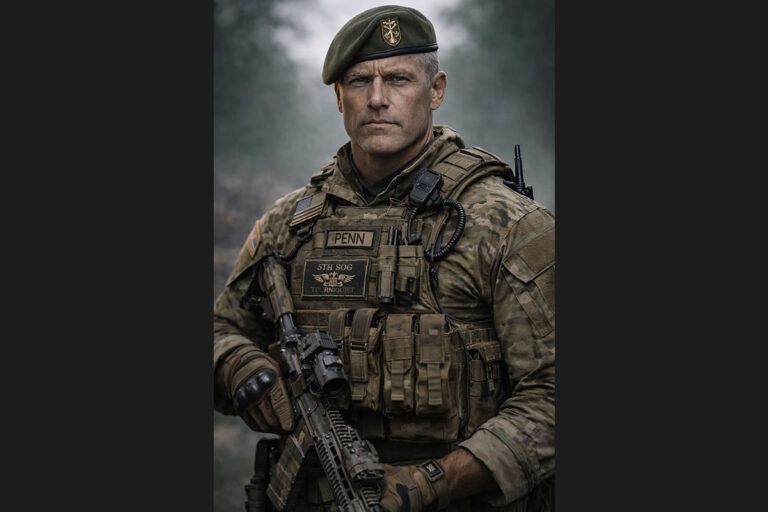
Daniel Penn looks at the world as a soldier and commander. He notices threats, distance, weapons, exits, failures in procedure, command responsibility, and things that do not fit the available intelligence.
Wolfgar can witness the same human behavior and interpret it through an entirely different cultural and species framework. His literariness and seriousness become funny because he is not trying to make a joke. That collision creates several tense but humorous interactions.
The “Uno Reverse card”
Then Book III: Blood Moon Rising introduces Steve. Steve is an entirely different problem. His narration is contaminated by self-justification. He remembers corruption while constructing excuses for why it was not really “that bad.”
So he condemns people he exploited. But he also recognizes something may have been his fault and then immediately tries to rationalize it away. He rewrites his own moral history while telling it.
That means Book III does not simply give us: Daniel Penn, except now he is a mutant horse.
Thank God.
Instead, Steve changes the reading experience. Penn tends to turn chaos into command leverage. Wolfgar tends to turn human behavior into an anthropological puzzle. Steve turns his own history into a defense attorney’s closing argument.
That POV flexibility allows C2A to move between military thriller, horror, satire, apocalypse, science fiction, and character comedy without every section reading like the same narrator wearing a different name tag.
10. C2A remembers things
Perhaps the most important structural difference is that C2A is built around long memory.
- Objects matter
- Names matter
- Ranks and titles matter
- Weapons matter
- Jokes matter
- Trauma matters
- Primises matter
So small, seemingly throwaway lines can matter in books later. Something that appears to be “flavor” may acquire another layer later. For example, a strange reaction can become a warning sign after the reader learns more. An old weapon can become a memorial object. A ridiculous character moment can conceal something serious.
A future scene can change the meaning of an earlier scene without rewriting what happened. That gives the series substantial reread value.
C2A Comparative Analysis: The reread value
The first reading answers:
What happens next?
A later reading can reveal:
How much of this was already sitting in front of me?
Also, that is why some events are deliberately understated. Because not every setup announces itself. Not every warning comes with ominous music and a brightly lit sign. Sometimes a character says something strange, everybody moves on, and the meaning does not become clear until much later.
The story trusts the reader to remember. And occasionally rewards the reader for remembering something completely stupid. Because even the end of the world needs callbacks.
C2A Comparative Analysis: So What Is C2A?
The overall C2A Comparative Analysis is that none of the individual ingredients are unique.
- Military science fiction already exists.
- Monster hunters already exist.
- Black-project and government cover-ups exist.
- Christian apocalypse fiction exists.
Mutants, killer robots, powered armor, vampires, military bureaucracy, pandemics, and deeply questionable scientists have all been around the block.
What increasingly gives Countdown to Armageddon its own identity is the combination:
Technical realism + military institutional realism + character-specific humor + long-term trauma + explicitly but gradually discovered Christian cosmology + human absurdity inside catastrophic events + callbacks that change meaning on reread.
The books also refuse to stay in one genre register.
Book I can move from special operations to vampire hunting, powered armor, demonic interrogation, asymmetrical warfare, grief, and theology.
Book II expands into military law, barracks comedy, training, technological development, large-scale warfare, pandemic horror, government messaging, and eventually one extremely weird wedding.
Then Book III goes even farther, opening centuries after the collapse before dropping back into the head of a disgraced, mutated former cop whose greatest known superpower may be hindsight.
Somehow all of that still belongs to the same story. The glue is not the genre. The glue is character and consequence.
So if a single description is absolutely required:
Countdown to Armageddon is a military-apocalyptic ensemble saga that treats supernatural warfare like an intelligence problem, technology like something a pissed-off mechnic eventually has to fix, faith like something characters have to earn their way toward, and humor like emergency psychological equipment.
That doesn’t fit neatly into an Amazon category. But then, neither does the spocalypse.
Where Does Countdown to Armageddon Belong on Your Shelf?
C2A Comparative Analysis summary.
If your bookshelf already has room for military thrillers, monster hunters, apocalyptic fiction, black-project conspiracies, military science fiction, and the occasional argument over whether sufficient application of high explosives can solve a supernatural problem, C2A is not as far from home as it appears.
The war is just beginning.
– The War Is Coming –
The complete Book I saga EPUB Digital Edition
Countdown to Armageddon Book I: The Book of Daniel
Ready to enter the hidden war before the first shot is fired?
Begin with Countdown to Armageddon: The Book of Daniel. The novel releases on Amazon on September 11, 2026, and is available for pre-order now.
Or buy it directly today and save 17%!
C2A Merch Store
Available Now!
Download Now:
EPUB/MOBI
Buy Direct and Save 17%
Amazon Kindle
Pre-Order
EPUB Download
on 9/11/2026
Start uncovering the hidden war today.