
No Magic Buttons: The Tech of C2A
No Magic Buttons. Science fiction has a very annoying habit of inventing technology that works perfectly when the plot needs it. I have never liked that approach because that is not the way stuffs works in reality. Technology in Countdown to Armageddon can be extraordinarily advanced. So it can also break, overheat, run out of power or fuel, or exceed its design limits.
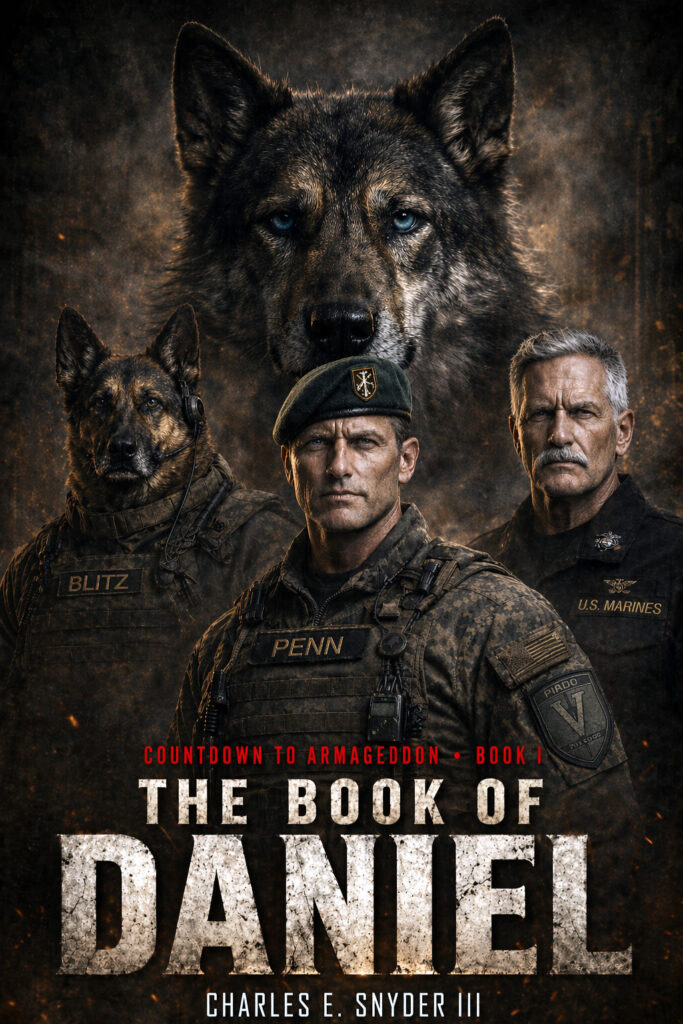
THE WAR IS JUST BEGINNING!
Advanced Review Copy (ARC) Readers Wanted!Countdown to Armageddon: The Book of Daniel
Release Date: September 11, 2026
Limited slots are still available!
Sometimes the technology works exactly as intended. Unfortunately, the enemy also gets a vote. So does physics. Also, Murphy’s Law remains undefeated.
That became one of my basic rules while building the technology of C2A. There are No Magic Buttons. If technology gives my characters a new capability, something still needs to limit it.
Otherwise, every problem eventually gets the same lazy trope solution. Push the button, some magical shit happens, and the story moves on. Yeah, right. That gets real boring, real fast.
The Future Arrives Unevenly
One of my favorite pieces of worldbuilding appears very early in The Book of Daniel. An airborne ambulance passes over Pittsburgh street traffic while Daniel Penn is walking through the city. Nobody stops and gawks at it because this is simply part of life in 2058.
However, Penn arrives in Pittsburgh aboard an old diesel-powered charter bus. Later, military air-cars and far more advanced equipment enter the story. Old and new technology continue existing beside each other, just like in the real world.
That was intentional because technological change rarely replaces everything at once. Because costs, training, and maintenance all effect the rate of adoption. We already live in that kind of world today. Cars can drive themselves (sometimes even safely), and yet I have a 25-year-old pickup truck sitting in my driveway.
Additionally, I have another truck that is only 10-years old, but I’m the one driving. No battery-powered buggies are in my future; I’ll stick with the ones that require liquefied dinosaur go-gravy, thank you.
Anyway, C2A works the same way. New tech gets layered over old infrastructure. Also, militaries keep good equipment long after somebody invents “newer, faster, more betterer.”
Finally, budgets matter. Logistics matter. Availability matters. Funding-cuts matter. Sometimes the best machine is simply the one that still starts or is all that is available.
Better Does Not Mean Perfect
Advanced equipment should solve problems. But it should also create new ones. Better night vision improves battlefield awareness. Bright light still overwhelms it at exactly the wrong moment. It requires batteries or charging. Abuse, dust, flying debris- all can render it useless, expensive combat bling.
Better optics let soldiers see farther and identify targets more accurately. Yet heavy rain can still turn the world into a blurry, visual soup. Communications can cover enormous distances, while explosions, gunfire, metal building structures, and reinforced concrete can still make them nearly useless.
The opening battle of The Book of Daniel establishes that distinction quickly. Communications are effectively nullified when everyone is transmitting at the same time, yelling incoherently. Penn’s Green Berets have modern weapons, communications, and night-vision gear. They are experienced, practiced soldiers who know how to use all of it.
However, none of that equipment explains what is attacking them.
Technology can provide information. But it does not automatically provide understanding. That difference matters throughout the entire series.
No Magic Buttons: The TH-36A Shawnee VTOL
The Shawnee Heavy Troop Transport is one of my favorite pieces of tech in C2A. It is fast, powerful, ugly, and far beyond anything flying today. But it is still an aircraft.
Someone has to fly it, and someone has to maintain it. Fuel, hydraulics, engines, electronics, payload, damage, and mechanical stress still matter. Advanced technology does not grant immunity from basic aviation considerations.
Eventually, some idiot will also ask the aircraft to carry more than it should. Lift ratings and load capacities are suggestions. Meanwhile, some soldier somewhere hears about maximum loads, accepts it as a personal challenge, and says “hold my beer.” So if you go far enough back in time, there was probably a Roman Soldier once that overloaded a cart. History repeats itself.
Evan Fernino and Amanda Warner do not operate a flying plot device. They skillfully operate a finicky flying machine with limits and consequences. It’s loud, really-really loud, has limits, range, and only so much space for walking, talking, bullet-sponges, and their toys. That becomes part of the problems they must solve.
That makes the Shawnee, the Conestoga, and the Susquehannock more interesting to me. More realistic. More believable. I do not want it to work perfectly every time because the heroes need a flawless steed. So I want readers to believe somebody had to engineer the things. Not that an A-10 Warthog and a UH-60 Blackhawk got drunk one night and suddenly had illegitimate offspring.
Sometimes the Solution Is 113 Years Old
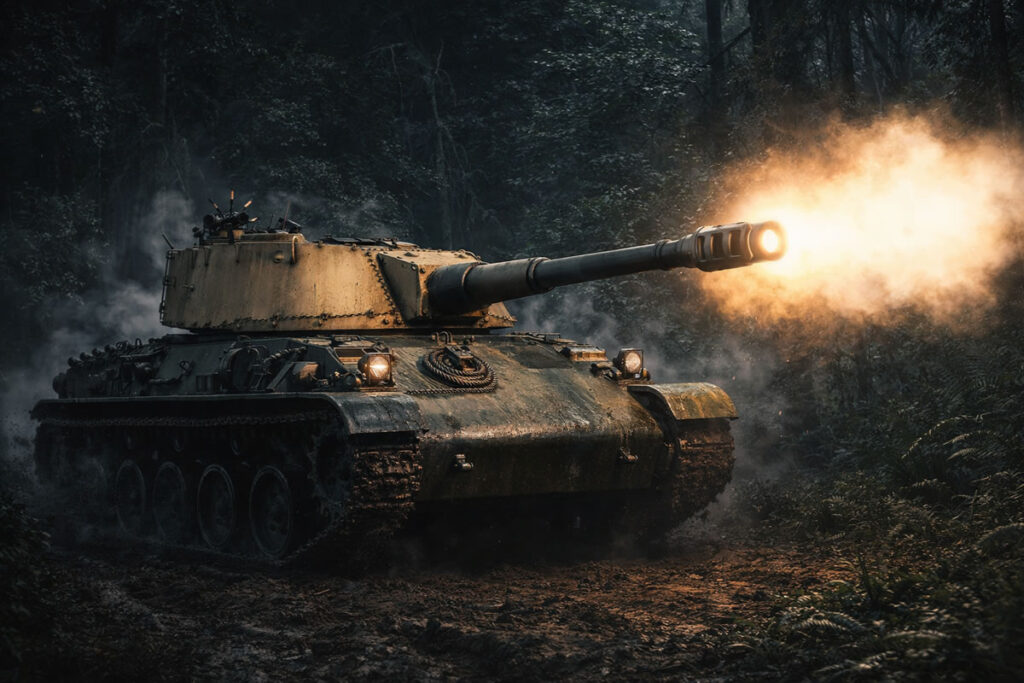
Then there is the JackCat, which approaches technological development from the opposite direction. But it is not some revolutionary weapons platform. It is the unholy marriage of desperation and bad ideas on tracks, with some armor, and a gun. Penn needs an anti-armor solution before the Battle of 77 Westing. However, no one has a convenient main battle tank stowed in their rucksack.
So Bueller starts snooping around, looking at what’s available.
The resulting machine combines pieces of two different tank destroyers: an M18 Hellcat chassis and an M36 Jackson turret assembly. Weight gets removed, systems get repaired and modified, and common sense becomes the latest KIA in Book I.
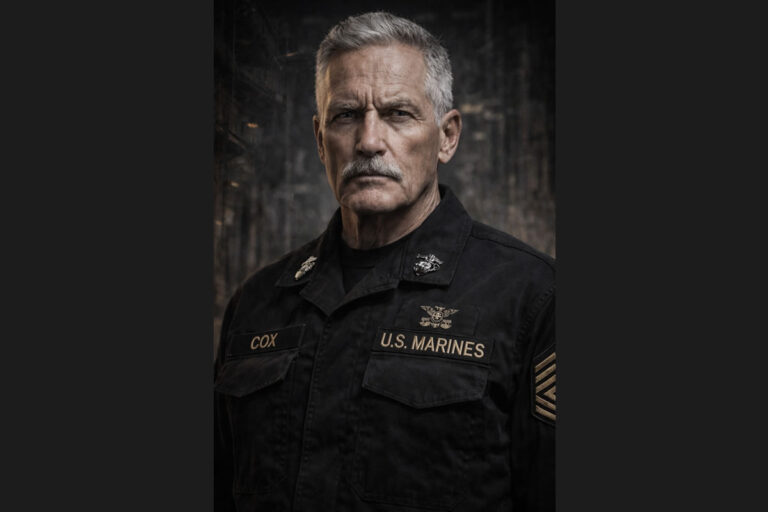
Sergeant Major Cox eventually describes the abomination as two pieces of junk on one set of tracks and a self-propelled death sentence. He insults it even more, but that alone is quite possibly the most accurate description in the entire series.
Also, the JackCat has limited ammunition and an inexperienced crew. Kriggs becomes the loader, which should concern OSHA and any responsible insurance company. It is ugly as sin, just as dangerous to the crew as anyone who may be standing too close, and improvised.
However, it gives Penn an option he did not have before. Sometimes that matters more than whether something is new.
Medical Nanos Are Not Resurrection Machines
Medical nanotechnology creates a dangerous problem for science fiction writers. Once microscopic machines can repair severe injuries, death can become a mild inconvenience instead of a final consequence. I usually hit that wall in other books, put it down, and rarely come back.
I don’t want readers to feel like that. So No Magic Buttons in C2A.
Medical nanos in C2A can accomplish remarkable things. They can stabilize injuries, administer and closely monitor painkillers, assist healing, and give doctors options that would seem impossible by today’s standards. So they still have limits, risks, and consequences.
But What About ‘Professor’ Kriggs?
Then Marcus Kriggs gets involved. He introduces an entirely different category of risk, consequences, and half a dozen crimes against humanity.
Book I eventually forces Penn to confront more than technical capability. He must decide whether having the ability to do something gives him the right to do it. Especially since he was ready to have Kriggs tossed unceremoniously from a fast-moving Shawnee for forcing it on him first.
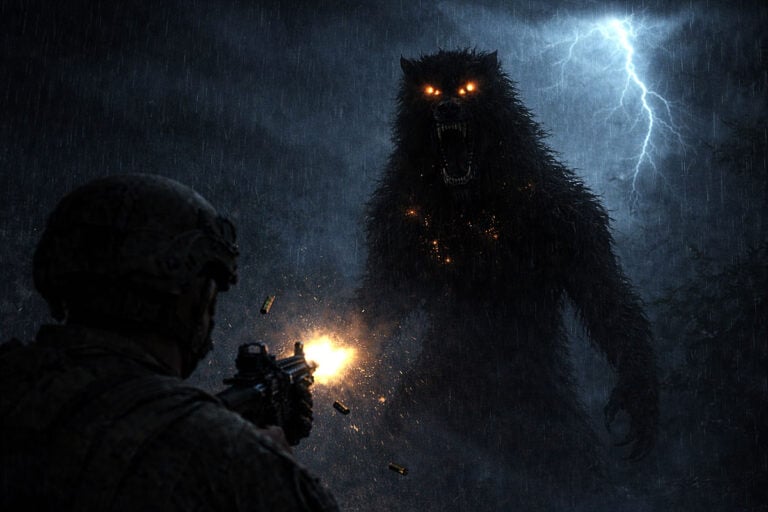
Then there is Blitz and Wolfgar. They come to Penn through Project Chimera. They are badly injured, and the team is without proper medical facilities. Blitz and Wolfgar are also soldiers and thinking beings, not pets, not salves, not issued equipment. Their substantial ability to resist treatment is as important as their choice to refuse. That matters a lot. And if just one of them refuses, there are not enough healthy humans left to force the issue. Much less if they both refuse. See you in the afterlife.
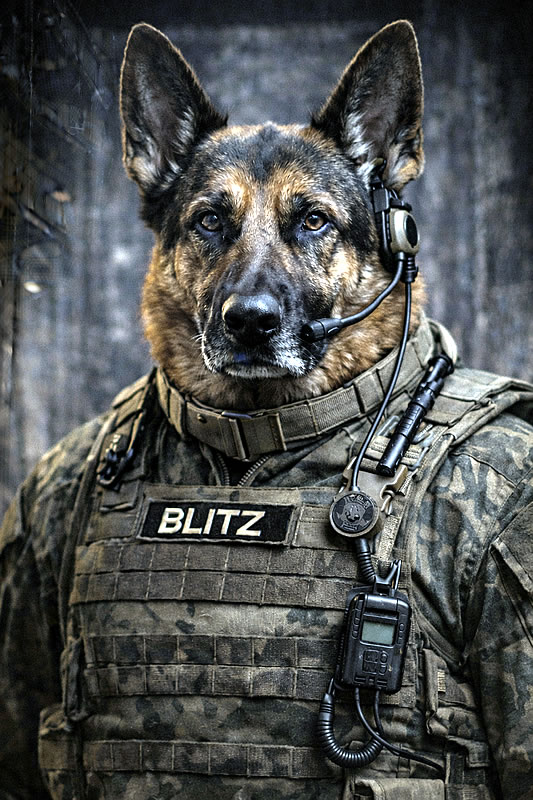
Highly intelligent, built like a 200lb linebacker

WARNING: 8ft tall mountain of fur and regret
The engineering question becomes a command and morality question. It is no longer simply, “Can we do this?” It becomes, “Should we do this?” Then if one or both say, “No, thanks.” It then quickly becomes, “Is it even wise to do this?”
Vastly different problems.
No Magic Buttons: Advanced Body Armor
The same philosophy eventually produced HT-PASS, the High-Threat Personal Armor Survival System. It is not simply better body armor with bigger ballistic protection numbers attached. HT-PASS is an integrated combat-survival platform. So different operators require different solutions.
Not just the “Tac-ti-cool” kind of fashionable plot-armor kit popular in other books and movies. The price is wrong, Bob!
Human operators can use full-encapsulation environmental protection with limited climate control. Chimera operators have very different physiological and tactical requirements. Their hearing, peripheral vision, sense of smell, movement, neck mobility, and jaw freedom all matter. So one size and style does not fit all; that would actually be worse engineering. And some damn lazy writing.
More About HT-PASS
The armor also uses modular external sections, attached to a customizable internal load-bearing and distribution system. So damaged sections can be removed, inspected, repaired, or replaced without taking the entire package out of service. It may sound mundane compared to indestructible pimp-suits in other stories, but it is much closer to reality.
For example, modern U.S. military armor consists of a vest with two twelve-pound ballistic plates. One is placed in the front, the other in the rear. If someone takes a shot or shrapnel that renders the plate inert or deformed, you don’t take the whole damn thing out of service, haul it around in the field, and leave one of your bros without protection. You replace the damn plate and unalive some more baddies. Well, once the lead butterflies stop zipping past your noggin.
So it is also far more useful for building a believable world.
No Magic Buttons: Someone Has To Fix The Shit
Armor creates logistics. Someone has to fit it, maintain it, repair it, and supply replacement parts. Eventually, someone also has to explain why the armor plate now has a softball-sized hole in it.
Better armor does not make the wearer invincible. It eliminates or greatly reduces some small-arms threats to keeping your internal organs internally. But the guy on the other end trying to delete you before you delete them sees the problem and adjust. Suddenly, you now have much bigger and more powerful pew-pews flying at you.
Then there is the educational consideration. The wearer has to become familiar with the system. That means time, more man-hours on training. Also, someone or several of them, depending on the size of the unit, need people trained in field maintenance and repairs. Lastly, you need people somewhere that can repair or replace more severe damage in a safe, secure, and preferably less-hostile location.
Then Kriggs Gets Involved
Most C2A technology begins with somebody trying to solve a legitimate problem. Then there is the science-goblin of chaos, Marcus Kriggs.
Kriggs has two doctorates, enormous technical ability, questionable morals, no restraint, and an unhealthy relationship with the words “what if.” Markus Bueller is frequently standing nearby when this happens. So he is often guilty by association or standing too close to the blast radius. But still, the main rule applies: No Magic Buttons.
Sometimes Bueller provides much-needed adult supervision. Other times he appears to function as an accomplice with top-tier mechanical aptitude. However, it is often not up to the task of containing Kriggs, his many-layered bad ideas, and getting suckered into the latest scheme.
Their work expands into sensors, robotics, nanos, weapons, armor, power systems, and federal-level goblinry. Some projects solve genuine battlefield problems. Others create problems that can turn into a battlefield if left unchecked. But somehow, a few even deserve their own criminal codes.
Part of the Insanity
That is the fun part. When Marc and Mark get together, run for cover, or physically restrain them, there are few other options. Or Sergeant Major Cox sets them straight with some good, old-fashioned, Marine Corps verbal hostility. But the jokes even follow the same technical rule. Their mind-boggling inventions cannot simply solve everything because they are brilliant.
More capability requires more power. More power creates heat. Bigger systems create mobility problems, maintenance requirements, and complexity breeds failure points.
Congratulations, Professor. Engineering has occurred. Why are your robots prone from failure when navigating over an extension cord?
No Magic Buttons: Technology Should Leave Fingerprints
One rule ties most C2A technology together. Machines should feel like somebody built them.
They should have designers, operators, maintainers, compromises, and unintended consequences. Different people should also look at the same machine differently.
Fernino sees an aircraft through a love of flying and a pilot’s eyes. Bueller sees systems, preventative maintenance, repairs, fluids, and tolerances. Kriggs sees opportunities to tinker, which makes everyone with two or more functioning brain cells extremely nervous.
Daniel Penn almost always asks a much simpler question. Will these help keep his people alive?
That matters more to him than whether the solution looks cool. Elegance is in simplicity.
Sometimes that answer is an advanced VTOL. Other times it is a powered armor or medical nanotech. And this one time, at Green Beret camp, it is two armored vehicles combined to make one questionable, but working, life decision.
Five Centuries Later
There is also a longer game behind the technology of C2A.
Book III: Blood Moon Rising opens centuries after Penn’s era. Much of the advanced technology from his lifetime has become archeological treasure. Future nations search old facilities and corrupted archives for things their ancestors once considered ordinary equipment.
Medical nanos, advanced armor, military aircraft, fusion systems, and automata become pieces of lost history. Engineers centuries later struggle to understand technologies people once complained about having to fix and maintain.
Irony.
During Penn’s lifetime, Bueller and Kriggs both curse about obsolete vehicles breaking down again. Five hundred or more years later, people are willing to risk lives and resources on an expedition just to understand how it worked.
Technology changes rapidly. However, understanding requires a much longer development cycle.
No Magic Buttons
I want C2A technology to feel advanced without becoming magic. Every system, sensor, weapon, and power plant must have a cost. Every machine and tool has limitations and tolerances.
Everything needs maintenance. Everything. Equipment gets damaged. Operators make mistakes. Engineers design stuff for manufacturing, rarely with field maintenance in mind. Look into the problems the German Wehrmacht ran into in 1944 with the Tigers, Panthers, and JagdTigers.
That is how technology becomes part of the world instead of decorative ornaments hanging from a tree.
Humanity may eventually master fusion power, medical nanos, military robotics, and power armor. We may build aircraft that make today’s machines look primitive. But one thing will always remain an eternal truth:
Somebody still has to get dirty fixing the damn thing.
– The War Is Coming –
The complete Book I saga EPUB Digital Edition
Countdown to Armageddon Book I: The Book of Daniel
Ready to enter the hidden war before the first shot is fired?
Begin with Countdown to Armageddon: The Book of Daniel. The novel releases on Amazon on September 11, 2026, and is available for pre-order now.
Or buy it directly today and save 17%!
C2A Merch Store
Available Now!
Download Now:
EPUB/MOBI
Buy Direct and Save 17%
Amazon Kindle
Pre-Order
EPUB Download
on 9/11/2026
Start uncovering the hidden war today.